Cookies

This website uses cookies that require your consent.

Skip to content

We are strengthening our organization for the future

ControlTech Engineering continues to grow: At the turn of the year, we exceeded the 100-employee mark for the first time. This growth is encouraging—and it comes with responsibility. To ensure that we can continue to work quickly, reliably, and in close proximity to our customers in the future, we are realigning our organization as of January 1, 2026. 

The new management team at ControlTech Engineering AG. 
Back row (from left): Philipp Homberger, Michael Gempp, Fabian Meury, Didier Pfäffli, Nicolas Bitschnau, Patric Sumlak
Middle row (from left): Andreas Gerber, Pascal Franz, Jan Widmer, Daniela Brunner, Christoph Doggwiler, Christian Kunz, Simon Wirz
Front row (from left): Gerry Schnydrig, Raffael Hänggi, Dominic Brunner, Andreas Langer, Sascha Zeller, Thierry Dietlin.
The new management team at ControlTech Engineering AG. Back row (from left): Philipp Homberger, Michael Gempp, Fabian Meury, Didier Pfäffli, Nicolas Bitschnau, Patric Sumlak. Middle row (from left): Andreas Gerber, Pascal Franz, Jan Widmer, Daniela Brunner, Christoph Doggwiler, Christian Kunz, Simon Wirz. Front row (from left): Gerry Schnydrig, Raffael Hänggi, Dominic Brunner, Andreas Langer, Sascha Zeller, Thierry Dietlin.

Why we are further developing our structure

In recent years, we have been able to significantly expand our services in automation, industrial IT, and data management. This has resulted in more projects, more responsibility, and higher demands on leadership and availability. Our goal is to continue to be there for our partners in a fast, pragmatic, and solution-oriented manner, even as our organization grows. 

With the new structure, we are strengthening clear responsibilities, relieving the existing management and ensuring greater proximity to customers and projects. 

What exactly is changing?

Starting January 1, 2026, our three business units will be managed more directly. Each unit will be led by two managers with different areas of focus: 

  • Automation

    Raffael Hänggi & Gerry Schnydrig

  • Industrial IT

    Philipp Homberger & Michael Gempp

  • Data Management

    Philipp Homberger (acting) & Sascha Zeller

Depending on its size, each area is divided into several teams to ensure an optimal span of control. We make sure that the span of control is between 6 and 8 employees. This enables closer, more direct, and faster daily coordination within the projects, as well as effective support for all employees. 

At the same time, decisions within CTE management will be distributed more broadly, thereby accelerating the decision-making process. Decisions should be made specifically where the requirements and needs of our customers are best known. 

What does this mean for our customers?

  • Shorter distances:

    Managers and project leaders are getting closer to the projects. 

  • More focus:

    Clearer roles relieve project managers, giving them more time for customers and solutions. 

  • More stable processes:

    Smaller teams and clear responsibilities increase speed and quality. 

  • The contact persons remain the same:

    Nothing will change for our customers in terms of day-to-day contact. 
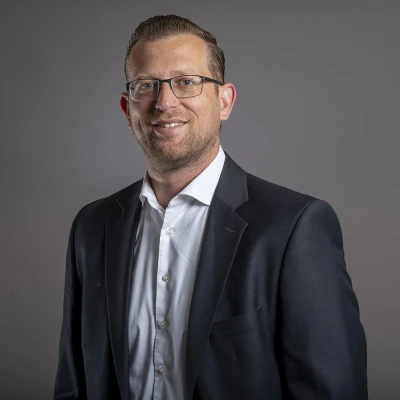
"We want to continue growing—but without losing the agility that has made us strong. The new structure creates clarity, strengthens leadership, and brings us even closer to our customers. I am particularly pleased that we were able to fill all new roles from within our own team."
Dominic Brunner, CEO ControlTech Engineering AG

Questions for CEODominic Brunner

My project manager or project team member is taking on additional management responsibilities. Does this mean that they will have less time for my project in the future? How does this change benefit me as a customer?

Dominic Brunner: No. Our project managers will continue to be closely involved in customer projects.
The new structure specifically relieves them of administrative and internal tasks so that they can focus more on technical leadership, quality, and customer concerns. 


Will my current project manager be taken away from me because he is taking on a new role internally?

Dominic Brunner: No. Existing project relationships are a high priority for us. Taking on additional management responsibilities does not automatically lead to a change in project manager. Where changes are sensible or necessary, they are made transparently, at an early stage, and always with the aim of ensuring continuity and quality for our customers. 


CTE has always communicated its previously very flat organization as an efficiency advantage. With the new structure, the organization will become deeper—how can we ensure that this does not lead to more overhead and higher costs for customers?

Dominic Brunner: No. The new structure is not designed to increase overhead, but rather to improve efficiency. With clearer responsibilities, smaller management spans, and shorter decision-making processes, we can manage projects in a more targeted manner and respond more quickly.


How do you ensure that department and team leaders remain closely involved with projects and don't lose touch with the latest technological developments?

Dominic Brunner: Our managers continue to come from a practical background and remain involved in operations. Proximity to projects, technologies, and customers is a central component of our leadership role. We do not see leadership as something distant, but rather as a responsibility to remain close to the issues and people. 


One of CTE's greatest strengths has always been the close, cross-functional collaboration between automation, industrial IT, and data management. With the clearer structure, isn't there a risk of disrupting the smooth flow of information?

Dominic Brunner: No. Close cooperation between automation, industrial IT, and data management remains a core principle of how we work. The new structure creates clarity in leadership, not separation in cooperation. Cross-divisional projects, shared responsibility, and active exchange remain an integral part of our organization. 


Many customers appreciate CTE's open, fair, and cooperative culture. How do you ensure that this culture is maintained even as the organization grows?

Dominic Brunner: Our culture is shaped by our employees.
Openness, fairness, and partnership-based cooperation are values that we consciously cultivate. The fact that we were able to fill all management roles internally is a strong sign of continuity and a living culture, even in a growing organization. 


Doesn't the new organizational structure inevitably lead to more management overhead? How do you ensure that customers are not affected by this in the form of higher costs?

Dominic Brunner: Our goal is the opposite: greater impact with clear roles.
The new structure allows us to distribute responsibility more broadly and make decisions where project and customer knowledge is greatest. 


Picture of Dominic Brunner, CFO and member of the Executive Board at ControlTech Engineering AG.

Do you have any further questions? We are always happy to help.

Book a non-binding meeting with Dominic Brunner, CEO.

Contact us now

About CTE

ControlTech Engineering AG (CTE) is a leading provider of automation solutions for complex production facilities in the GMP environment and related innovative solutions for high-availability industrial computer systems, OT networks and security, and software development. The family-owned company was founded in 1990 and now has over 100 employees.