Cookies

This website uses cookies that require your consent.

Skip to content

"Our local presence and understanding of quality are our advantage."

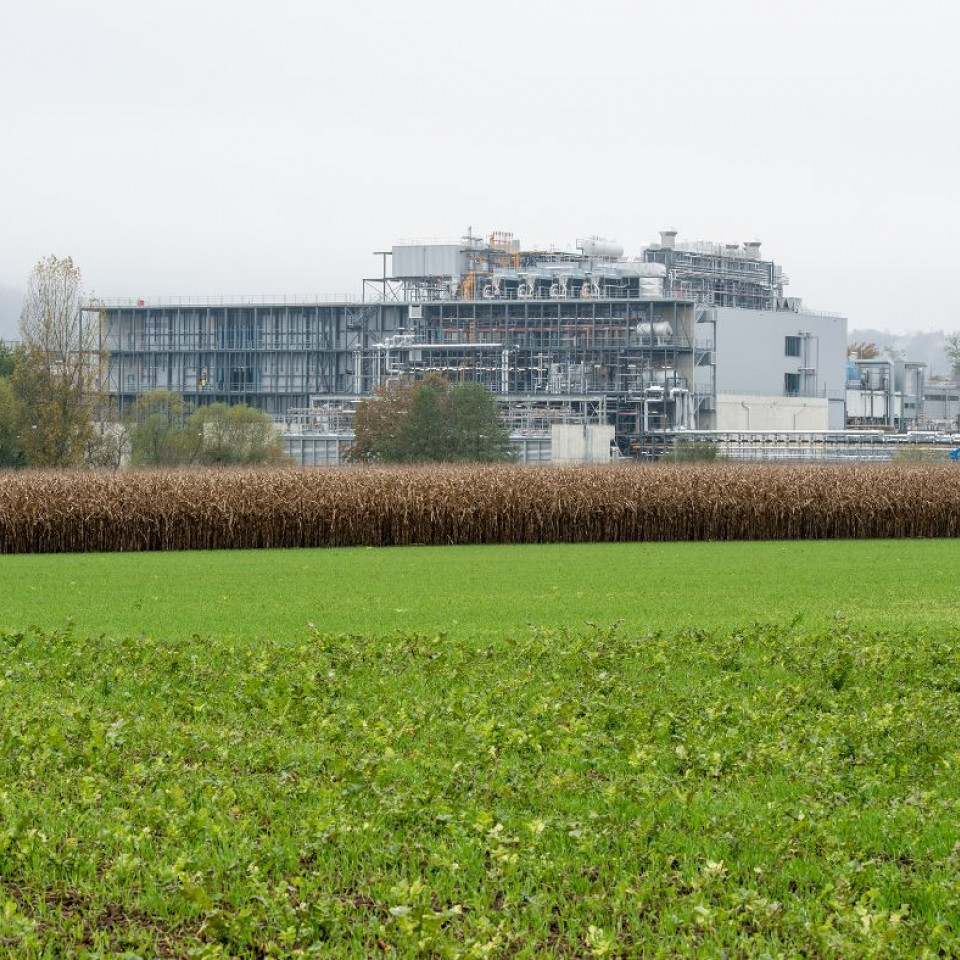
New things are being created: ControlTech Engineering is currently working on many major projects in the Northwestern Switzerland region. We talk to Dominic Brunner and Andreas Langer about the challenges and success factors as an SME, the competition and the importance of working across disciplines.
How do you assess the economic situation in our industry?

Dominic Brunner: Overall, we’re pleased to see that significant investment continues to flow into the region. At the same time, we recognize that all project stakeholders—including both suppliers and manufacturing companies—must develop solutions that enable products to be offered in a globally competitive manner. This means that in every project, whether large or small, we must provide reliable, top-quality solutions at the lowest possible cost.

How can we put this into practice for the benefit of companies?

Andreas Langer: Our contribution lies above all in the expertise of our well-trained employees, who have the necessary know-how. Another important element is our clear and structured approach to each individual project, which helps us to set the right priorities. We focus in particular on topics that offer the customer and its users real added value in day-to-day operations. In addition, we specifically combine our expertise in the fields of automation, industrial IT and data management to create efficient and well-coordinated overall solutions.

Why is interdisciplinary work a decisive success factor?

Dominic Brunner: Through initiatives like Industry 4.0, we see that work and systems are becoming increasingly interconnected. Combining the disciplines of automation, industrial IT, and data management enables us to offer solutions that, when used together, are more cost-effective, better coordinated, and more reliable. Standardized concepts from these areas ensure that tasks and challenges are optimally solved with the right systems. After all, when systems are used far beyond their original intended purpose and burdened with too many workarounds, the result is often complex and unreliable solutions.

Which major projects are currently occupying us the most, and where are we right now?

Andreas Langer: We are involved in various large-scale projects, including projects at DOTTIKON EXCLUSIVE SYNTHESIS AG and Roche. At Dottikon, we are in the final phase. The goal here is to finalize every detail thoroughly and consistently so that the plant runs perfectly. At Roche, we are still in an early phase, in which concepts are being developed at various levels and with varying degrees of detail. This phase is crucial for laying the groundwork for efficient implementation, but it is also challenging, as important decisions must be made under conditions of uncertainty.

Dominic Brunner: Despite these challenges, we are confident that, with our experience and structured approach, we will succeed in these projects as well and achieve the desired results for our clients.

How do we manage large projects as a comparatively small SME?

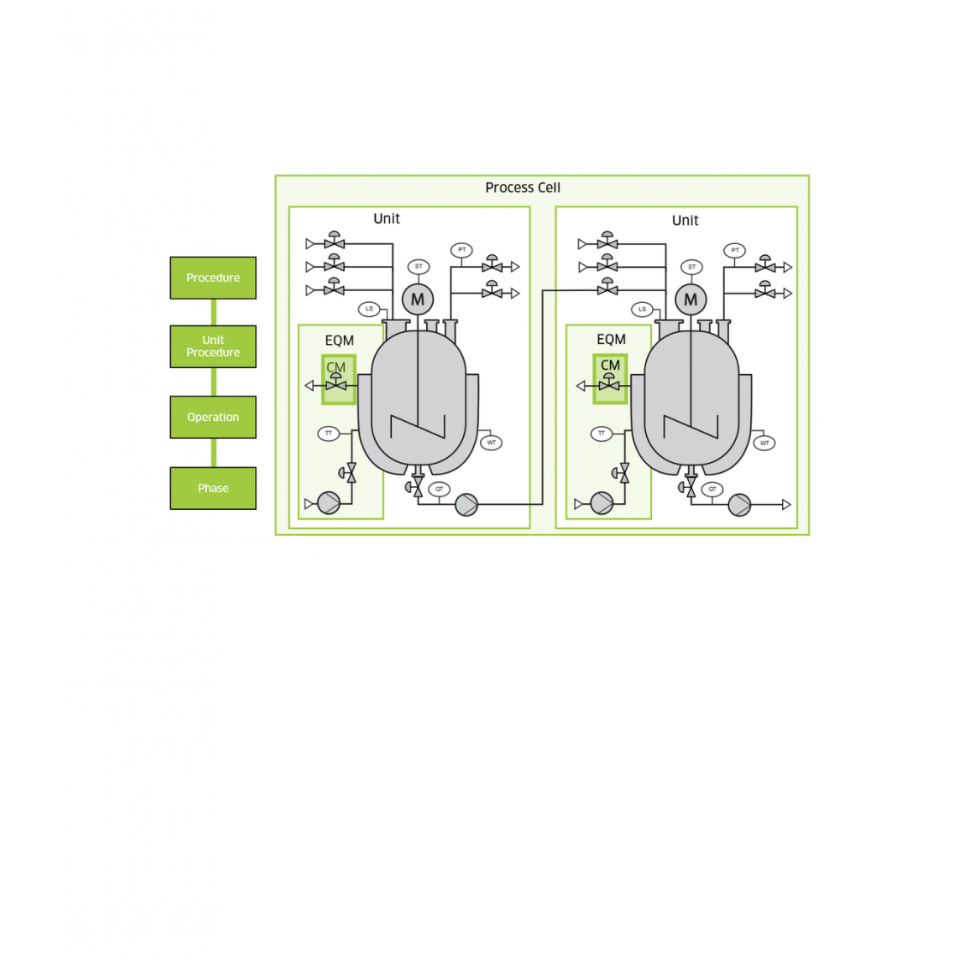
Dominic Brunner: A key aspect is that we don’t tackle these projects on our own. While automation, industrial IT, and data management are important components of larger projects, they are always embedded within the overall project alongside many other equally important disciplines. Especially in large-scale projects, we therefore always work together as part of a larger team consisting of people from the client side and other partners (particularly general contractors). Collaboration within the project team—even across company and departmental boundaries—is therefore always a key factor for success. Good communication and trust are essential in this regard. In addition, we have a clear vision and approach to project management based on our focus on the V-Model (What – How – Do – Verify). It is also crucial to always concentrate on the most important issues in each project phase and to focus on the client and their users’ needs.

Swiss engineers have also been criticized recently. What do you think of this?

Dominic Brunner: You have to be careful not to fall into the trap of making sweeping generalizations. There are definitely very good Swiss companies that have been successful worldwide for years. However, there are also companies or partnerships that don’t function ideally—regardless of whether they’re Swiss or international firms. Our advantage certainly lies in our cultural and linguistic proximity to the region, which fosters communication and collaboration. We place great emphasis on quality and adhere to high standards, though not at any cost—in the long run, however, this commitment to quality always pays off.

How do you perceive the competition from abroad?

Andreas Langer: We’re definitely feeling the competition from abroad. It’s true that our hourly rates are higher than those of many foreign providers or companies whose staff work in Switzerland only on a temporary basis. But the hourly rate isn’t the deciding factor. What matters is the total cost incurred until a functional solution that meets the customer’s requirements is implemented. When measured in terms of total cost, we’re absolutely competitive.

So regional presence and personal trust continue to be an important factor for cooperation?

Andreas Langer: Our customers greatly appreciate our responsiveness and our commitment to quality at fair prices. Our work is designed to meet the long-term needs of our customers and their users. A local presence plays a role in this, but it is not the only factor. What is far more important is that we consistently live up to our “Total Quality” promise and offer our customers solutions that “run” reliably.
Picture of Andreas Langer, COO at ControlTech Engineering AG.

Would you also like to manage a project with us?

Book a non-binding meeting with Andreas Langer, COO.

Contact us now